+8615614802111 (WeChat & WhatsApp)


Jun. 24, 2026
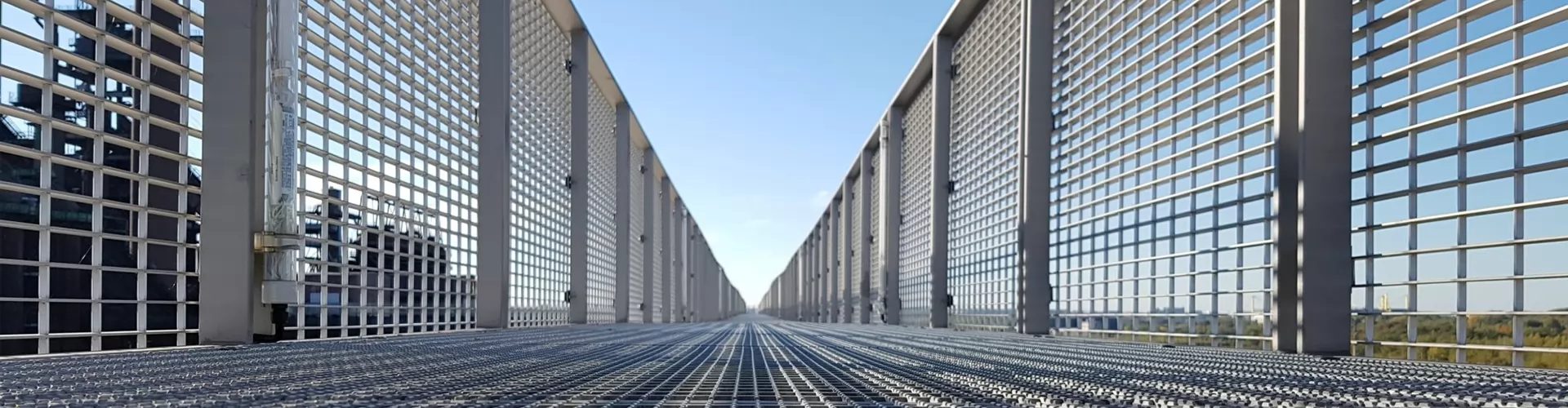
Pressure-locked grating is a popular type of steel grating known for its clean appearance, high strength, and precise construction. Unlike welded grating, pressure-locked grating is manufactured through a mechanical locking process that creates strong connections without welding. Because of its attractive design and reliable performance, it is widely used in industrial facilities, commercial buildings, walkways, and architectural projects.
In this guide, we explain how pressure-locked grating is manufactured and why this production method offers significant advantages.

Pressure-locked grating is made by mechanically inserting cross bars into pre-slotted load-bearing bars under high pressure. The pressure causes the components to lock together securely, creating a rigid and durable grating panel.
The finished product features:
High structural strength
Excellent dimensional accuracy
Smooth and aesthetically pleasing appearance
Good ventilation and drainage performance
Long service life
The manufacturing process begins with selecting high-quality steel materials. The most commonly used materials include:
Carbon steel
Stainless steel
Galvanized steel
The choice of material depends on the project environment, load requirements, and corrosion resistance needs.
30 mm × 3 mm
30 mm × 5 mm
40 mm × 5 mm
50 mm × 5 mm
Custom sizes available
The bearing bars are cut according to the required panel dimensions. Precision cutting ensures that each bar has accurate lengths and smooth edges.
The center spacing of the bearing bars is then determined based on the required load capacity.
Common bearing bar spacing includes:
30 mm
40 mm
50 mm
60 mm
Smaller spacing generally provides higher load-bearing capacity.
After cutting, slots are precisely machined into the bearing bars.
These slots are designed to:
Maintain accurate cross bar positioning
Ensure uniform panel dimensions
Create secure mechanical connections
Improve structural stability
The precision of the slotting process directly influences the quality of the finished grating.
Cross bars are inserted into the pre-cut slots of the bearing bars.
Common cross bar spacing includes:
50 mm
100 mm
The cross bars help distribute loads evenly while maintaining the grating's rigidity and dimensional stability.
This is the most important stage of manufacturing.
A high-pressure machine applies significant force to mechanically press the cross bars into the slots of the bearing bars. The steel components become tightly interlocked, forming a rigid panel without the need for welding.
The pressure-locking process offers several advantages:
Strong mechanical connections
Minimal thermal distortion
Excellent dimensional consistency
Smooth surface appearance
Reduced residual stress compared with welding
The result is a grating panel with both structural strength and architectural appeal.
After pressure locking, the panels are trimmed to their final dimensions.
Additional fabrication can include:
Cutting irregular shapes
Creating openings for pipes and equipment
Producing circular or special-shaped panels
Adding edge banding and reinforcement bars
This customization allows pressure-locked grating to meet the requirements of complex projects.
Surface treatment improves corrosion resistance and enhances appearance.
A zinc coating is applied to protect the steel from rust and environmental corrosion. Hot-dip galvanized pressure-locked grating is widely used in outdoor and corrosive environments.
Industrial coatings provide additional protection while offering various color options for architectural applications.
Before shipment, each grating panel undergoes strict quality inspections, including:
Dimensional accuracy checks
Bearing bar spacing inspection
Cross bar alignment verification
Surface quality inspection
Load-bearing performance testing
Coating thickness examination
Comprehensive inspection ensures that every panel meets project specifications and industry standards.
Compared with welded grating, pressure-locked grating offers several benefits:
The mechanically locked structure creates clean lines and a modern architectural appearance.
Precision manufacturing produces consistent spacing and uniform panel sizes.
The interlocked structure provides reliable load distribution and structural stability.
Pressure-locked grating can be manufactured in various sizes, shapes, and specifications to suit different projects.
Because no welding heat is involved, the grating experiences minimal deformation during production.
Pressure-locked grating is widely used in:
Industrial platforms and walkways
Power plants and chemical facilities
Municipal drainage systems
Stair treads and access platforms
Commercial buildings and shopping centers
Decorative facades and architectural projects
Offshore platforms and marine facilities
Pressure-locked grating is manufactured through a precise mechanical locking process that combines load-bearing bars and cross bars into a strong, durable, and aesthetically pleasing panel. The process includes material selection, precision cutting, slotting, cross bar insertion, pressure locking, finishing, and surface treatment.
Its high strength, excellent appearance, and customization capabilities make pressure-locked grating an ideal solution for both industrial and architectural applications.
As a professional pressure-locked grating manufacturer, we provide custom grating solutions with various materials, load capacities, grid sizes, and surface treatments to meet the requirements of projects worldwide.
OTHER NEWS

Feb. 15, 2025
Aluminum grating is a versatile and highly durable material used across industrial, commercial, and architectural applications. Known for its lightweight nature and superior corrosion resistance, aluminum grating offers a wide range of benefits that make it a popular choice in environments that demand strength, durability, and minimal maintenance.

Feb. 17, 2025
How to Choose the Right Steel Grating? Learn about the different types and their benefits
Steel grating is a structural material widely used in industry, construction, municipal administration and other fields. Different types of steel grating have their own characteristics in terms of strength, corrosion resistance, load-bearing capacity and aesthetics.
HOT-SALE PRODUCT

Welded Steel Grating is a high-quality flooring and access material that consists of load -bearing bars and crossbars.

Standard steel grating, also known as Open Steel Grating , usually has a length ranging from 1000mm to 7500mm and a width ranging from 993 to 1000mm. Bearing Bars range from 20*3mm to 150*10mm. The surface is flat or serrated, and the surface treatment is galvanized, painted or untreated.

Press-Locked Bar Grating is a steel grating product that tightly locks the cross bars (typically shorter than the bearing bars) and bearing bars together using high-pressure mechanical equipment.

Shunbo pressure welded grating is used in various industrial fields, municipal engineering, construction and offshore drilling platforms, etc. Each intersection of the Bearing Bar and the Cross Bar is continuously welded to form an extremely stable and durable structure.